
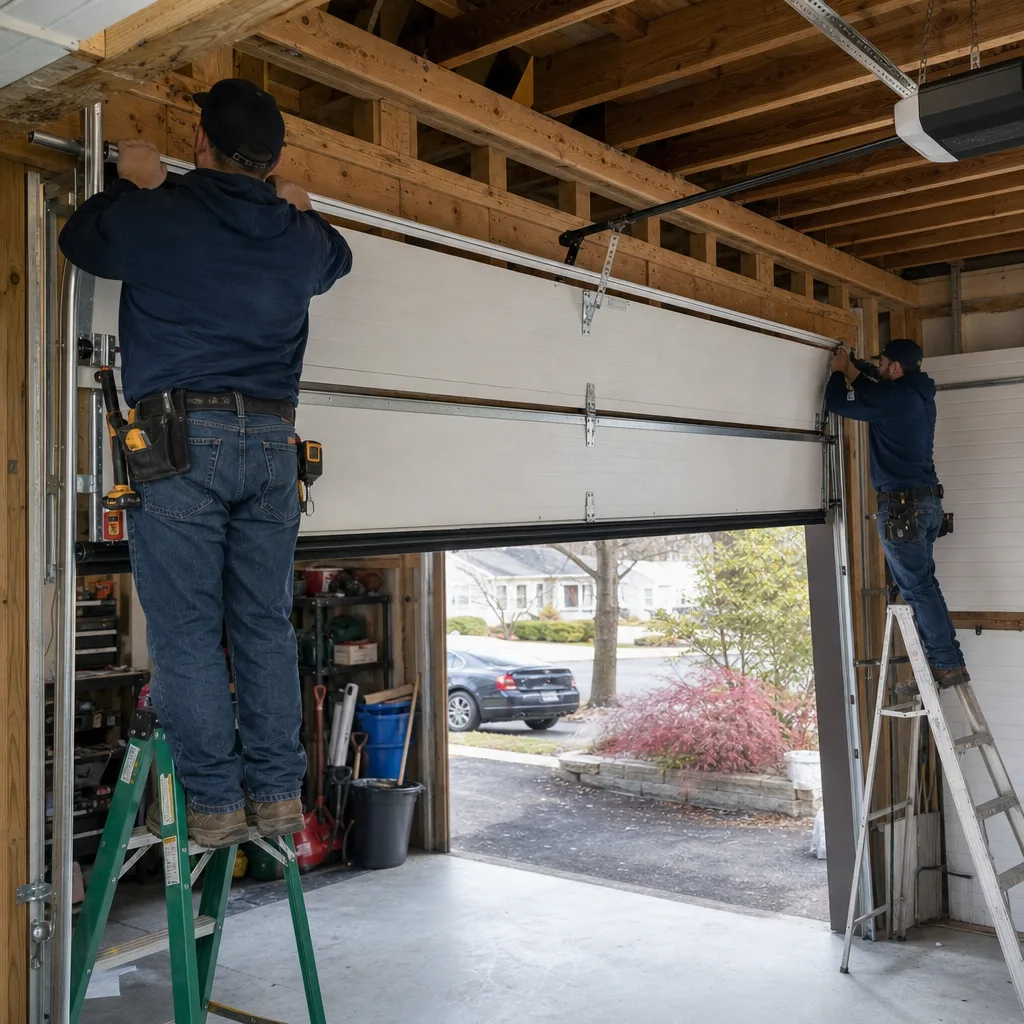
Last updated November 23, 2026
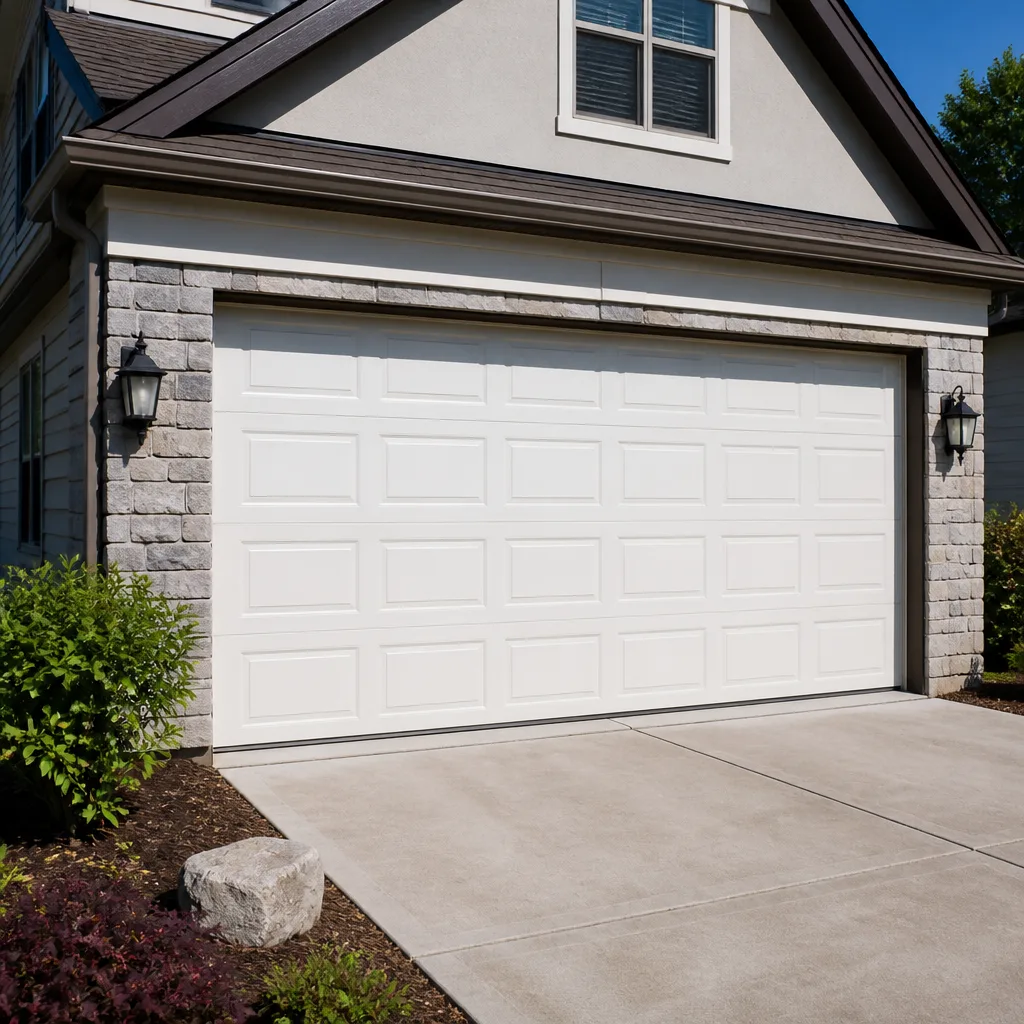 Raised-panel steel
 Carriage house
 Modern flush
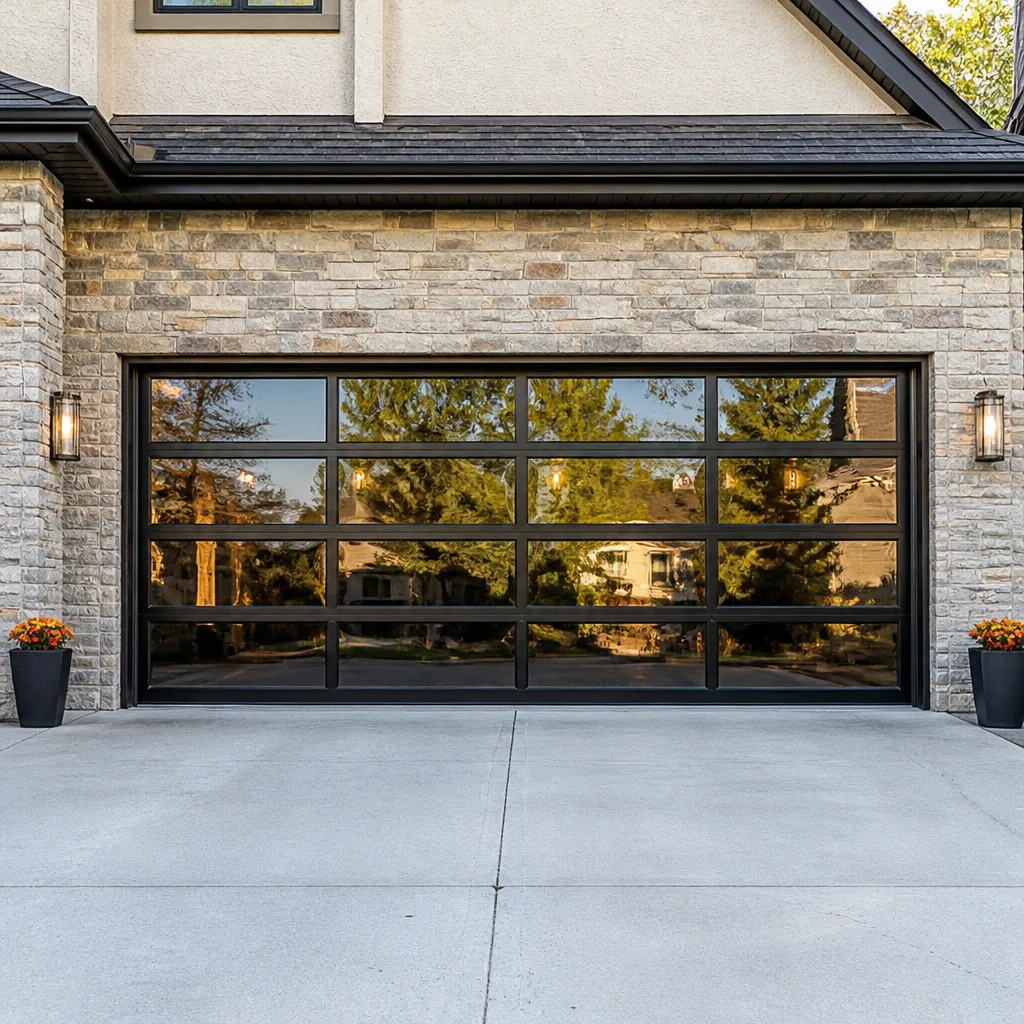 Full-view glass
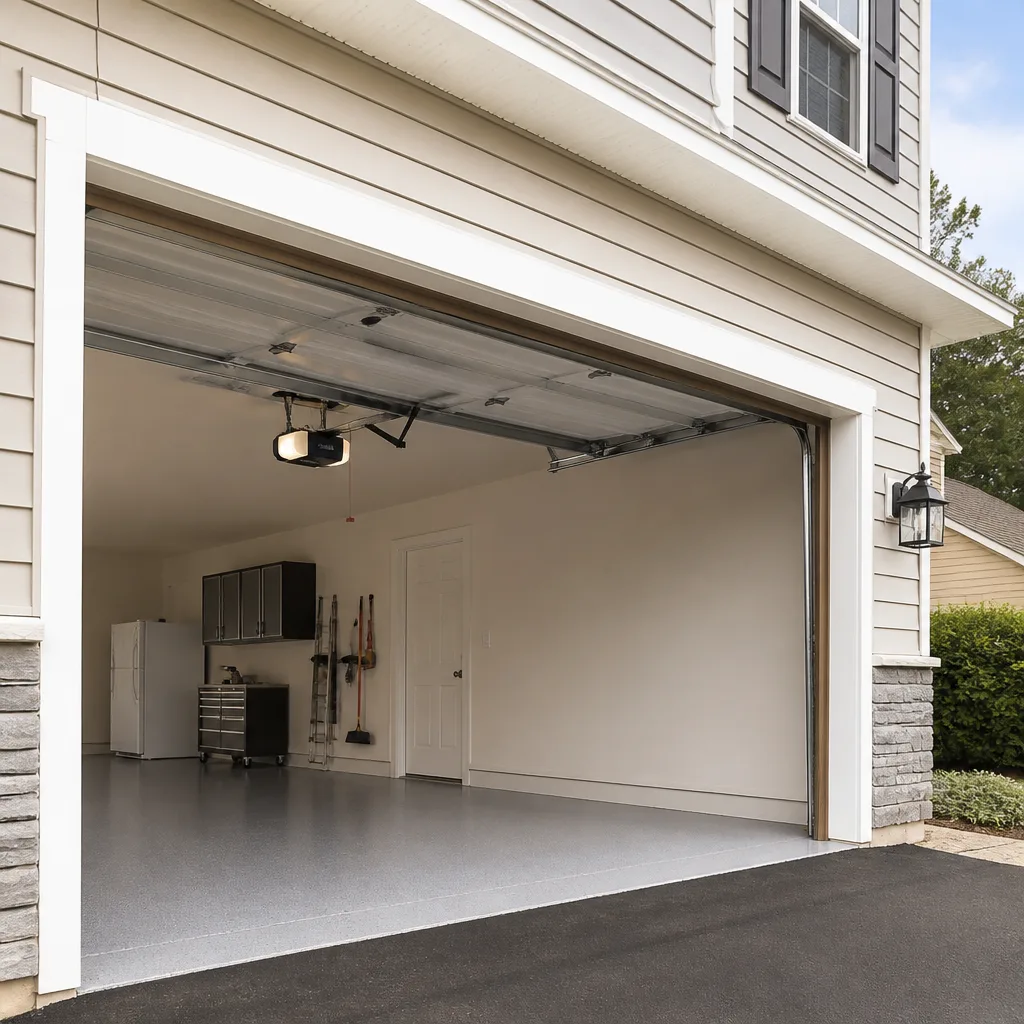 LiftMaster openers
 Chamberlain openers
Full 25-point door and opener safety check with every visit - springs, cables, rollers, tracks, and your LiftMaster or Chamberlain opener included
You get a price before we start. It does not change when the pro arrives.
Get your free estimateGarage Door Warning Signs: A Bethesda Homeowner’s Reference Guide
Most garage door symptom guides make the same mistake. They treat every reversal as one problem and every noise as “call a professional.” But a door that reverses before it reaches the floor and a door that reverses after touching it come from completely different mechanisms, and one of them is far more urgent than the other. In Bethesda, where brick colonials and newer townhomes both rely on their garage as the main entry, telling those two apart matters. This guide names the mechanical cause behind each warning sign, tells you how urgent it is, and says whether the door is safe to keep using while you schedule the fix.
Quick Answer
Garage door warning signs fall into three groups: sounds (grinding, popping, scraping, rattling), movement problems (slow, jerky, uneven, reversing), and sensor or opener behaviors. Each sign points to a specific mechanical cause, and the urgency varies widely. A door that reverses after touching the floor is usually a travel-limit setting you can monitor. A door that reverses before the floor, or one with a snapped spring, should be taken out of service immediately. If you’re unsure which category you’re in, stop operating the door and get eyes on it.
Styles & brands we work with
- Raised-panel steel
- Carriage house
- Modern flush
- Full-view glass
- LiftMaster openers
- Chamberlain openers
Table of Contents
- The Symptom-to-Cause Matrix: What Each Warning Sign Actually Means
- Reading the Sounds: Grinding, Popping, Scraping, Rattling
- Movement Problems: Slow, Jerky, Uneven, Reversing
- Sensor and Safety-Reverse Behaviors
- Risk Triage: Stop Now vs. Monitor for 2-4 Weeks
- Opener Problem or Hardware Problem? How to Tell Without Tools
- Why Some Warning Signs Are Seasonal
- What to Document Before the Technician Arrives
The Symptom-to-Cause Matrix: What Each Warning Sign Actually Means
The fastest way to understand a garage door problem is to match what you see or hear against the mechanism that produces it. A garage door is your home’s largest moving part, and every sound and motion trace back to one of a handful of systems: the springs, the cables, the rollers and hinges, the tracks, the opener, or the safety sensors. Bethesda homes tend to run older doors alongside newer ones on the same street, so we see every age bracket of hardware, often within a few blocks.
Here’s the reference table we’d give any Bethesda homeowner who calls with a symptom. Treat it as a starting point, not a diagnosis; a technician confirms on site.
- Loud bang, door won’t lift, one side sagging: a torsion spring has snapped. Stop using the door.
- Grinding or whining during travel: worn rollers or a dry or failing bearing, sometimes the opener gear.
- Popping or snapping during travel: a torsion spring winding or unwinding unevenly, or a cable jumping a drum.
- Scraping along one track: a bent track, a misaligned roller, or a door that’s been pushed off its track.
- Rattling at rest and in motion: loose hinges, brackets, or track fasteners.
- Door reverses before touching the floor: safety sensor obstruction or misalignment, or a travel-limit set too high.
- Door reverses after touching the floor: travel-limit and force settings, usually the opener.
- Door rises a few inches and stops: binding in the track, or the opener’s force limit tripping on resistance.
- Door moves unevenly, one side lagging: a broken spring on a two-spring system, or a cable problem.
- Opener runs but door doesn’t move: a broken spring, a snapped cable, or a decoupled carriage.
Each of these maps to a specific fix, and the price range and urgency differ. The matrix exists so you don’t have to guess. If two or more signs appear together, assume the more serious one and stop operating the door until someone looks at it.
Reading the Sounds: Grinding, Popping, Scraping, Rattling
Sounds are the earliest warning sign a garage door gives, and each frequency tells you which component is struggling. Bethesda’s humidity swings mean hardware that sits in an unconditioned garage for years can dry out, corrode, or loosen, so sound is often the first thing to change before motion does.
Grinding is metal-on-metal friction. The most common cause is a worn roller bearing or a dry hinge. As rollers wear, they stop rolling smoothly and start dragging, which produces a low, steady grind through the whole travel. If the grind is high-pitched and tracks the opener, the opener’s drive gear or screw assembly is the likely source. A technician confirms by isolating the opener from the door.
Popping is sharper and more alarming. On a torsion-spring door, popping often means the spring is winding unevenly or a cable is riding off its drum. That’s a hardware problem, not an opener problem, and popping typically calls for prompt attention rather than monitoring.
Scraping usually tracks to a single point along one side, because it’s a track problem: a bent section, a misaligned roller, or debris jammed in the channel. Scraping wears the roller and the track, so it tends to get worse with time rather than settle.
Rattling is the most benign sound on the list. It’s loose fasteners, hinges, or brackets, and it’s usually safe to monitor while you schedule a tune-up. It still deserves a look, because loose hardware can loosen further.
If you’re hearing any of these and want a brand-fluent diagnosis, our garage door repair service covers the full hardware side of the door, from a single loose hinge to a track that needs realignment.
Movement Problems: Slow, Jerky, Uneven, Reversing
Movement problems tell you how a system is failing, not just that it’s failing. Bethesda’s seasonal temperature swings expose movement issues fast, because cold mornings stiffen grease and warm afternoons loosen it. When a door behaves differently at 7am than at noon, that contrast is a diagnostic clue, not a coincidence.
Slow
A door that gets slow gradually is usually fighting resistance: worn rollers, a dry track, or an aging opener. A door that becomes slow suddenly after years of normal speed is a different story and points to binding or a spring losing tension.
Jerky
Jerking is uneven resistance during travel. The usual culprits are a dry or corroded track, a worn roller, or a hinge that’s binding. Jerky motion wears the opener faster than smooth motion because the motor compensates for resistance thousands of times per cycle.
Uneven (one side leading)
When one side of the door lags the other, a two-spring torsion system has likely lost one spring. A door running on one spring is under-capacity and its weight is being held unevenly. That’s a stop-now sign, not a monitor sign.
Reversing
This is where most symptom guides blur two very different problems:
- Reverses before touching the floor: the safety reverse sensor system is being triggered. The cause is an obstruction, a misaligned photo-eye, dirty lenses, or the opener’s travel limit being set above the floor. This is a sensor and limit issue, not a hardware issue.
- Reverses after touching the floor: the limit switch is set too high, or the opener’s force setting is too sensitive. The door is reaching the floor and then being pushed back up, which is an opener-setting problem.
That distinction is why “reversing” alone is not a useful symptom. The first case is often resolved by clearing an obstruction or adjusting a sensor. The second is a settings adjustment. Neither is a spring problem, but both need a look. Opener-side issues fall under garage door opener repair, and a technician can confirm which of the two you’re facing within minutes.
Sensor and Safety-Reverse Behaviors
The safety reverse system is the single most important safety feature on your door, and its failures are the most misread. Every modern opener uses two photo-eye sensors mounted near the floor on either side of the opening. They beam an invisible light across the opening, and if anything breaks the beam, the door stops or reverses. When that system misbehaves, the symptoms look mechanical but the cause is electrical or optical.
These are the behaviors that point to a sensor system problem rather than a hardware failure:
- Door reverses the instant it starts closing, every time, without touching anything.
- Door closes partway, then reverses and stays open.
- The opener’s light flashes a set number of times when you press the button (a code pattern specific to the opener brand; LiftMaster and Chamberlain units use patterns that a technician reads directly).
- The door won’t close at all when the sun hits the sensors directly, a common warm-weather issue.
- One sensor’s indicator light is off or flickering while the other is steady.
Common causes, in rough order of frequency, are a misaligned photo-eye, a dirty lens, an obstruction in the beam path, a loose wire at the sensor, or a failed sensor unit. Diagnosis is mostly alignment and continuity, which is why your first step should be checking whether the two sensors are pointed at each other and whether anything is in the way. Avoid adjusting the sensor by forcing it; the mounting bracket is usually the place to make a careful correction.
If the sensor system checks out but the door still reverses, the problem moves to the opener’s limit and force settings, which should be handled with the opener manual in hand. When in doubt, a trained technician can tell you in minutes whether you’re looking at a sensor or a setting. Our opener repair visits cover both sides of that line, brand by brand.
Risk Triage: Stop Now vs. Monitor for 2-4 Weeks
Bethesda homeowners ask the practical question more than any other: “Do I need to do something today, or can this wait?” The honest answer is that some warning signs are safe to watch for a few weeks, and some are not. Using a door with a pending failure can turn a modest repair into a larger one, so triage matters.
Stop using the door immediately
- A snapped torsion spring. The door is now unsupported and can drop, and the counterweight is gone. Never operate a door with a broken spring. This is a safety job, not a DIY job, and it falls squarely into garage door spring repair territory.
- A cable hanging loose or off its drum, or a visibly frayed cable. Cables are under high tension and can recoil with serious force. Stop and call.
- A door off its track, leaning, or with one side down. The door’s weight is unbalanced and the risk of it falling is real.
- A door that reverses before the floor and cannot be made to close by clearing the sensors. A door that won’t close is a security exposure, and a door that closes on resistance is a safety hazard to people and pets.
- Loud popping with visible spring or cable movement. Treat as a pending failure and stop.
Safe to monitor for 2-4 weeks
- Rattling from loose hinges or brackets. Annoying, not dangerous. Schedule a tune-up.
- A gradual slowdown. Note it and schedule service; don’t ignore it past a few weeks because it tends to worsen.
- Slight scraping on one track. Monitor, but watch for worsening or a door that starts to bind.
- A single dirty sensor or an occasional reversal in direct sun. Clean and align, then observe.
- A door that reverses after touching the floor. Usually adjustable settings; schedule a visit and keep an eye on it meanwhile.
When a sign falls on the stop-now side, the door needs attention soon, and our emergency garage door service exists for exactly this situation. We answer 24/7. Fast dispatch from 7am to 7pm, Sunday through Friday. A call outside dispatch hours is booked into the next opening.
Opener Problem or Hardware Problem? How to Tell Without Tools
Before you call anyone, you can draw a useful line without a single tool: is the failure in the opener or in the door’s hardware? That distinction changes who you should call, what parts are likely needed, and how long the visit will take. It also tells you whether a general handyman would be out of their depth.
Use this sequence, all of it visual and manual:
- Listen to the opener. Press the wall button. If you hear the motor running clearly but the door doesn’t move, the opener is fine and the door’s hardware has lost its drive. If you hear nothing, or a hum with no movement, the opener is suspect.
- Watch the carriage. With the door closed, pull the emergency release handle (the red cord) to disconnect the door from the opener. Then try lifting the door by hand. Only do this with the door fully closed and standing clear, and never on a door with a broken spring. If the door is heavy and won’t lift, the hardware (springs) is the problem. If it lifts smoothly by hand, the door’s fine and the opener is the problem.
- Check the sensor lights. Both photo-eyes should show a steady indicator light. One dark or flickering light means a sensor system fault, regardless of how the door behaves.
- Look for a light code. Many openers flash the ceiling light in a pattern when something’s wrong. Note the number of flashes; it’s brand-specific information the technician uses. Genie, LiftMaster, and Chamberlain each use their own flash logic, and a brand-fluent tech reads that pattern directly.
- Observe the door’s travel. If the door moves smoothly by hand but jerks under power, the opener’s force limit or gearing is the likely cause. If it jerks by hand, it’s hardware.
This is why brand knowledge matters. A LiftMaster opener and a Genie opener report faults differently, and a technician who works with all the major brands diagnoses faster. We work on LiftMaster, Chamberlain, Genie, Clopay, Amarr, Wayne Dalton, Craftsman, and Raynor equipment, and our technicians have up to 9 years of experience across them. If you’d rather not run the sequence yourself, call us for a repair visit and we’ll do it on site.
Why Some Warning Signs Are Seasonal
A warning sign that appears in January and vanishes in April is telling you something specific about its cause. Bethesda’s climate gives garage doors a real seasonal cycle: cold snaps, warm spells, high summer humidity, and autumn leaf debris. None of that has anything to do with salt air (Bethesda is inland), but temperature and moisture swing a garage door’s hardware enough to change how it behaves.
Cold-weather warning signs
- Sluggish opener in the morning, fine by afternoon. Grease in the opener’s drive and door’s hinges thickens in cold. A door that behaves this way is usually overdue for lubrication, not failing.
- Track scraping that appears in winter. Metal tracks and rollers shrink slightly in cold, and a marginal gap can close. The track needs a small adjustment, not replacement.
- Door reverses before the floor only on cold mornings. The opener’s force settings are at their limit; the cold increases resistance enough to trip the safety reverse. Worth an adjustment before it becomes an all-season issue.
- A door that becomes noisy in the cold. Dried-out hinges and rollers. One of the most routine cold-season fixes.
Warm-weather warning signs
- Reversals only when the sun hits the sensors directly. Sunlight overwhelms a marginal photo-eye. Move or shade the sensor without bending the bracket, or call for a check.
- A door that binds in summer humidity. Wooden doors and older metal tracks expand with moisture. Binding in high humidity points to track geometry, not hardware failure.
- Rattling that comes and goes. Heat loosens fasteners. Usually safe to monitor.
- Grinding that develops over the summer. Dried-out bearings and rollers. Lubrication is the usual answer.
What the seasonal pattern tells you
A sign tied strictly to temperature or humidity is usually a lubrication, adjustment, or track-geometry issue, and it’s the sort of thing a tune-up resolves. A sign that appears in all seasons, or that starts suddenly and stays, points to a component failure. When the pattern changes from seasonal to constant, that’s your cue to schedule service before the door stops working mid-morning on a day you need the car.
What to Document Before the Technician Arrives
Good documentation shortens diagnosis, which shortens your visit. In Bethesda, where some townhome garages are tightly packed and every inch of clearance matters, photos help the technician arrive already knowing the layout. A few minutes of phone video before the visit pays off.
Capture this before calling:
- A 30-second video of the door in motion. Start with the door closed and film through one full open-and-close cycle. The motion is often more informative than the description.
- A photo of the opener’s model and serial sticker. It’s usually on the back panel or under the light cover, and it tells the technician exactly which brand and model they’re dealing with. If you have a LiftMaster or a Chamberlain, this photo helps more than any other item on the list.
- A photo of each spring. Torsion springs (on a shaft above the door) and extension springs (along the tracks) are different jobs; a photo settles which one you have.
- Close-ups of the tracks, rollers, and hinges, especially the one that’s making the noise. Note where you see wear.
- A photo of the two photo-eye sensors and their indicator lights. Both should be lit; note if either is off or flickering.
- A short note on timing. When did the symptom start, does weather change it, and does it happen every cycle or only sometimes?
The combination of a video, the opener sticker, the spring photo, and the timing note takes about five minutes and usually saves a return visit. If you’re a homeowner mid-renovation or in a new build, add a photo of the door’s full exterior and the track brackets; the installation team needs those for measurement anyway. When a door is beyond saving, our installation team can pick up where the diagnostic visit left off, and you won’t need to call a second company.
Common Mistakes to Avoid
- Pulling the emergency release on a door with a broken spring. The door can drop fast and hard. Never disengage the opener unless the door is fully closed, and never on a door whose spring you suspect is broken. This is a fitter’s job.
- Bending or forcing the photo-eye sensor bracket. The sensors need to point at each other precisely. A bent bracket turns a two-minute alignment into a sensor replacement. Adjust the mount, not the eye.
- Ignoring a slow door for months. A slowdown that gets worse usually means a component is failing. Catching it in the monitor-for-weeks stage keeps the fix small; waiting until the door stops is when a repair becomes a replacement.
- Treating every noise as a spring failure. Grinding and rattling are usually roller and hinge issues. Jumping to the worst-case conclusion leads to the wrong call. Use the sound distinctions above.
- DIYing a torsion spring. Torsion springs store enough energy to cause serious injury and require specific tools to wind and release safely. Spring repair is a safety job, not a DIY job. A large share of garage door injury reports involve springs and cables; neither is a homeowner repair.
- Calling a general handyman for a brand-specific opener fault. A Genie or LiftMaster opener reports faults through its own logic, and a brand-fluent technician diagnoses faster. The wrong trade is a wasted visit.
- Using the emergency service for a monitoring-tier repair. Emergency response exists for real emergencies: a door stuck open with the house unsecured, a broken spring trapping a car, a door that won’t close. For a rattling hinge, a standard appointment frees up emergency capacity for the door that actually needs it.
For the bigger picture on what we do, see the team at Bethesda Garage Door Repair Pros.
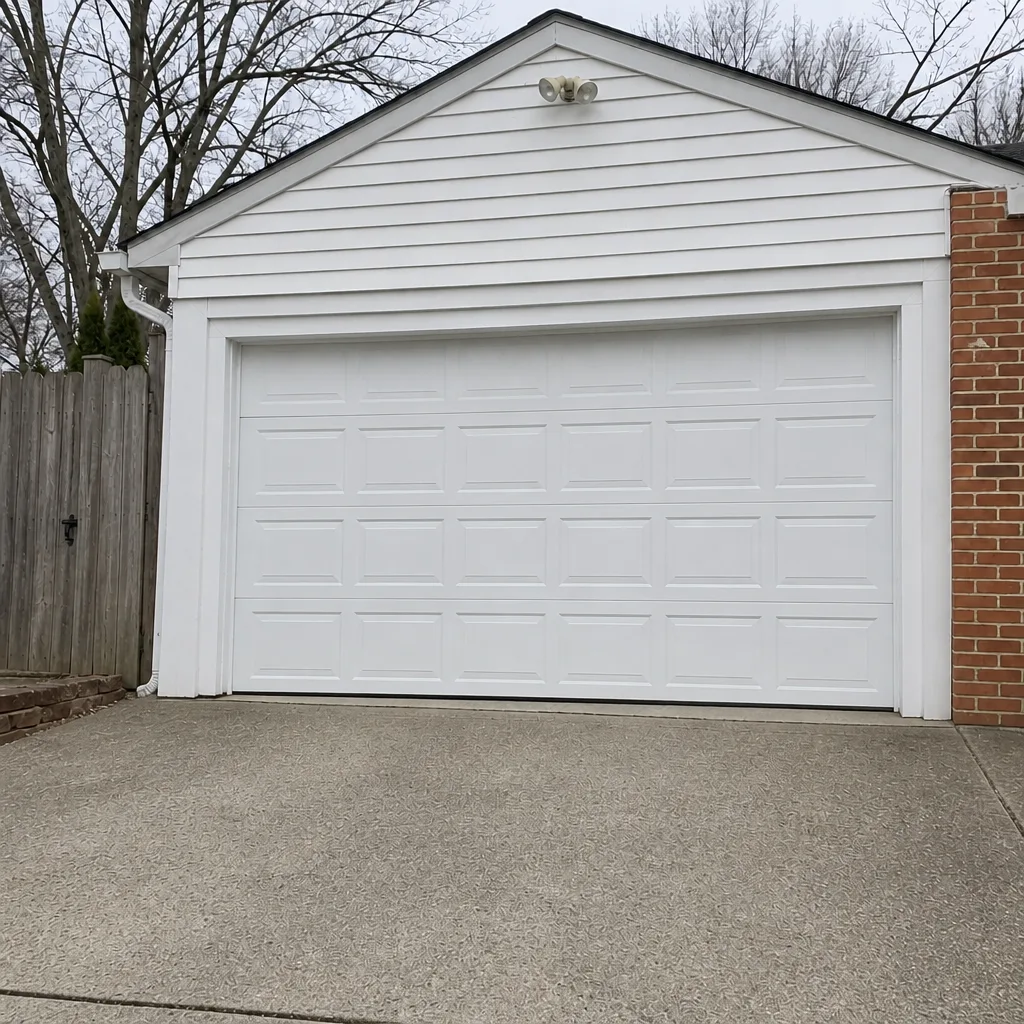
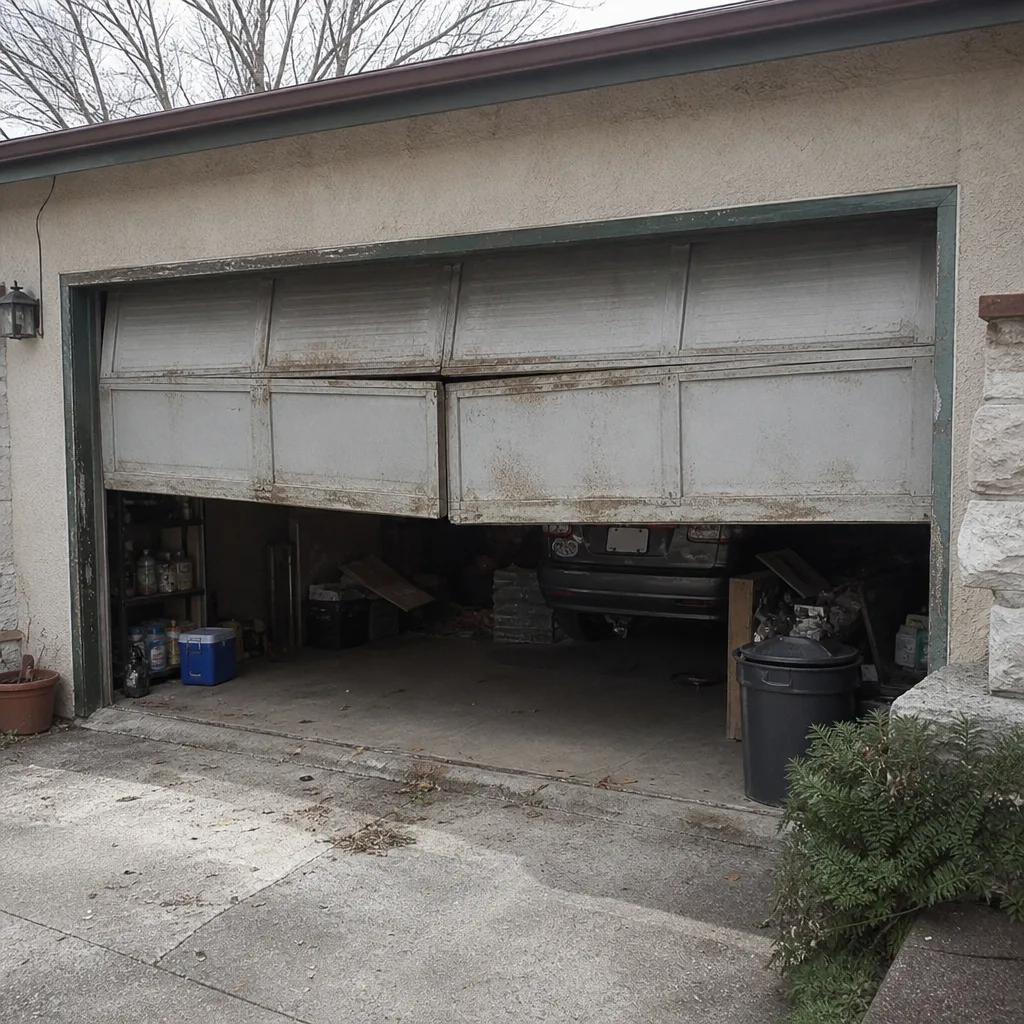
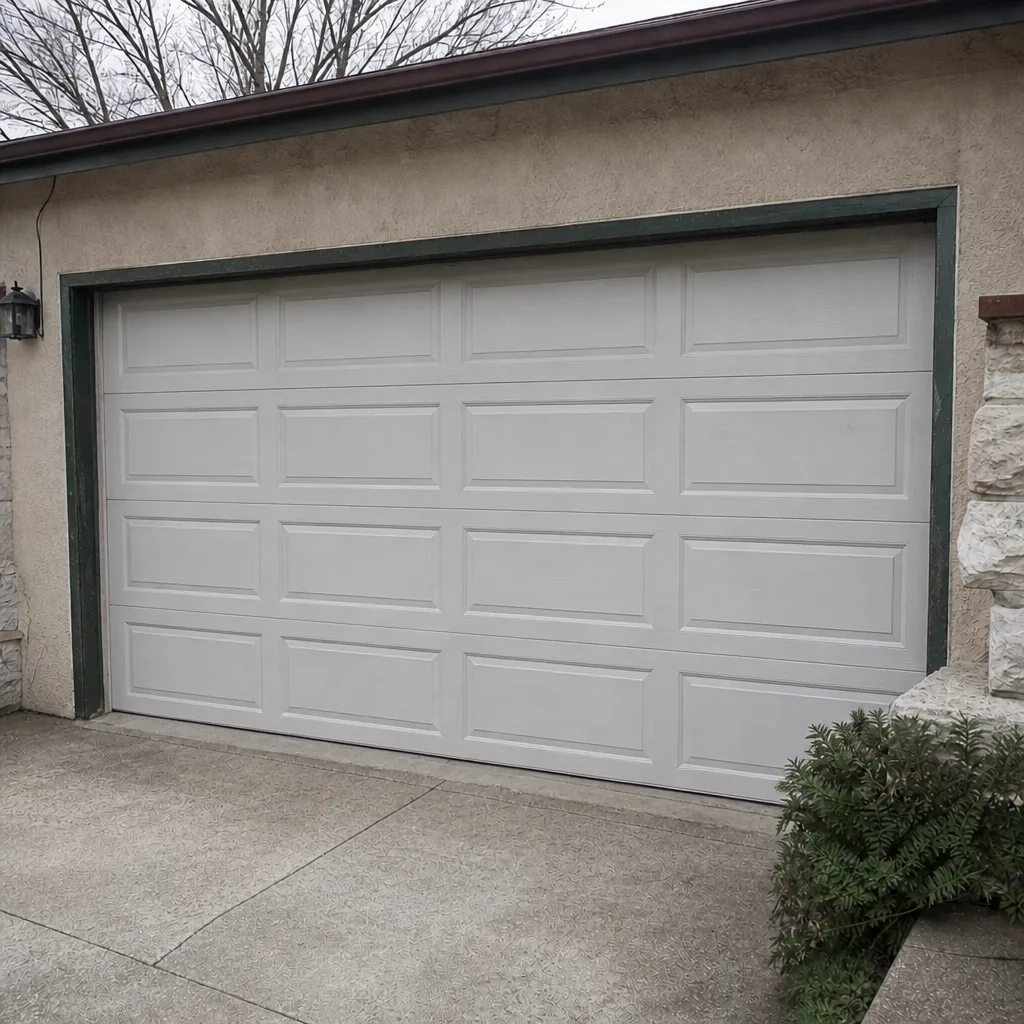
See the difference
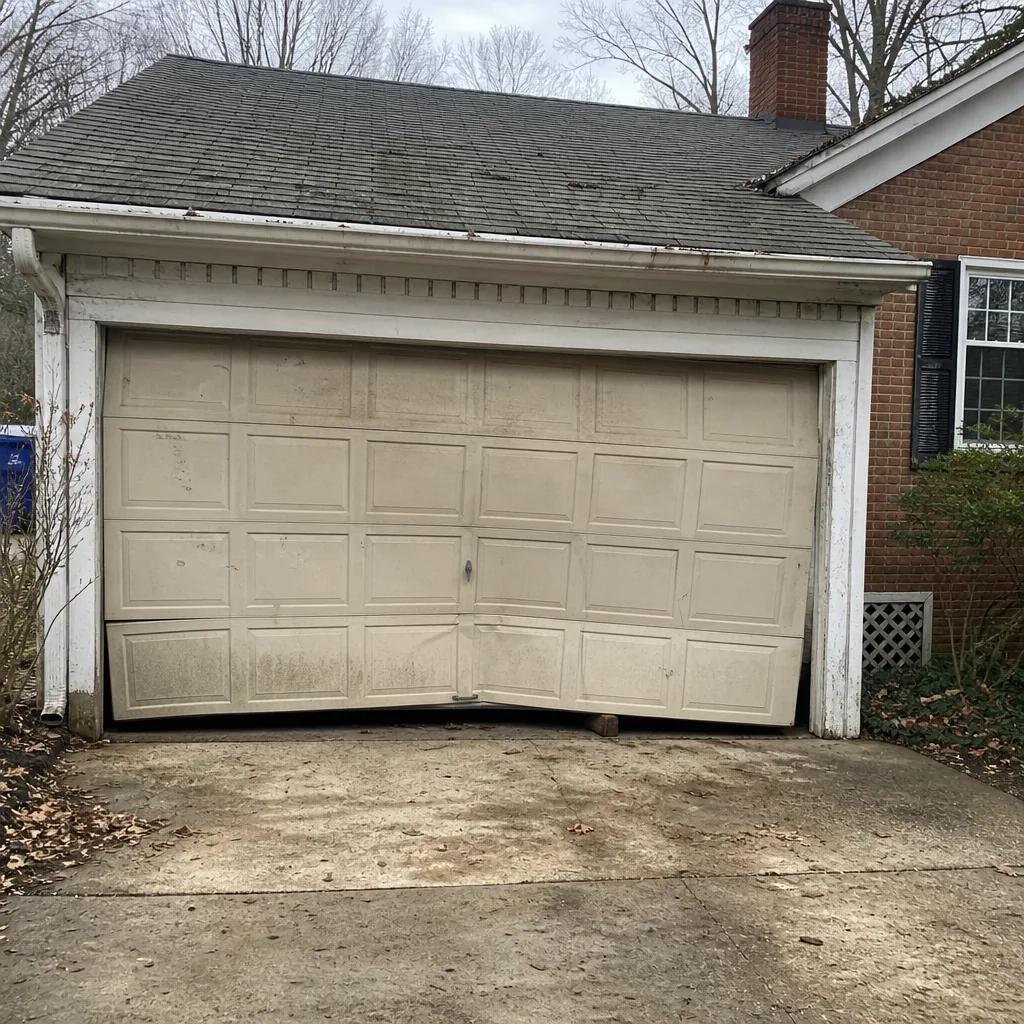 Before
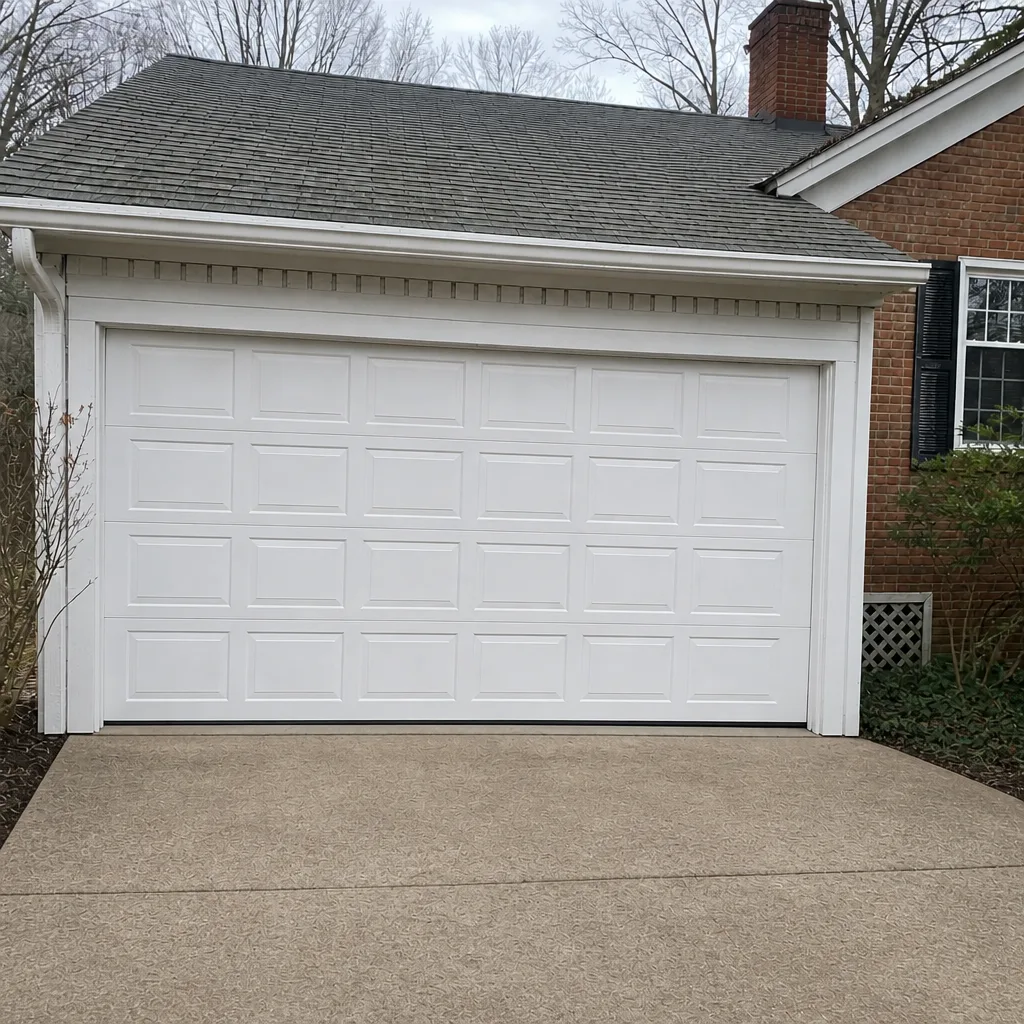 After
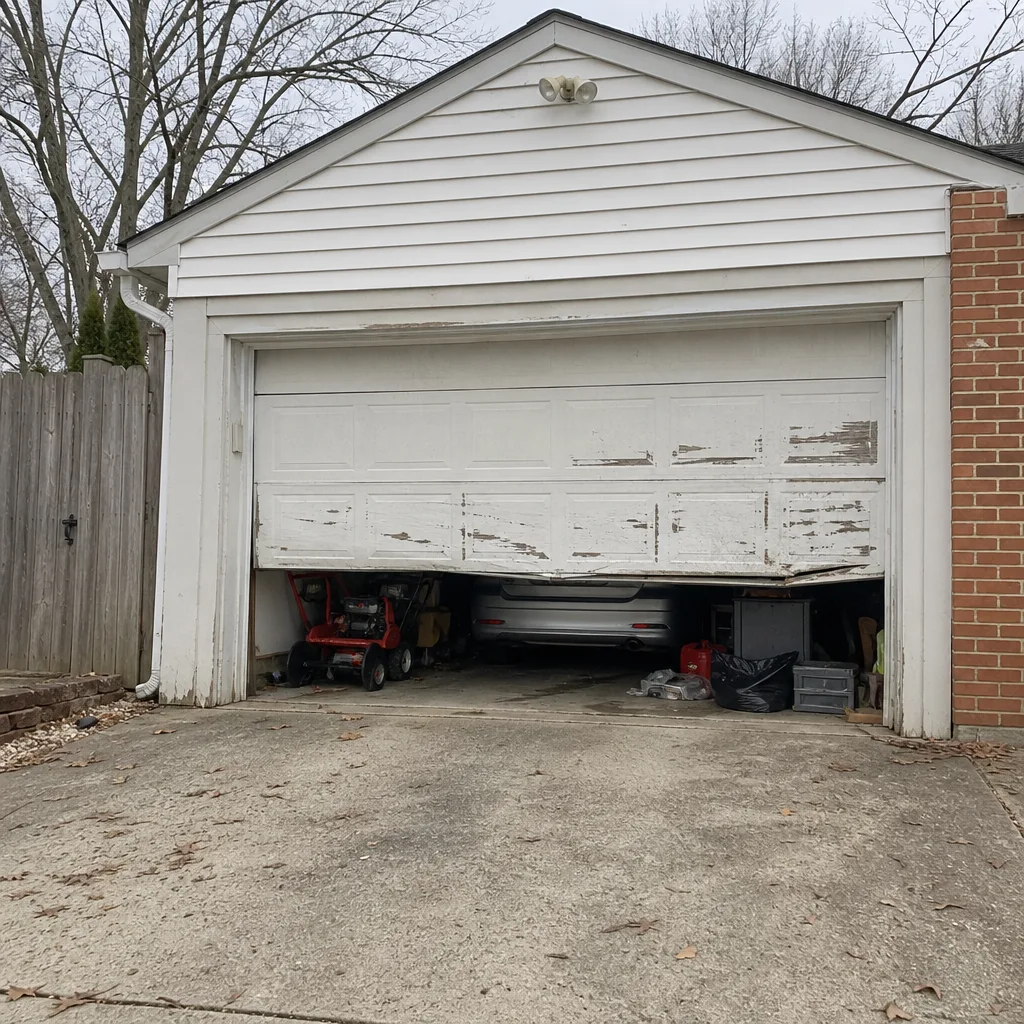 Before
 After
 Before
 After
When to Call a Professional
Call a professional when a warning sign is on the stop-now list, when the door won’t move, or when you can’t tell whether it’s an opener or a hardware problem. Also call when the same sign has come back after you adjusted something yourself. A snapped spring, a loose cable, a door off its track, and a door that can’t be made to close are all situations where the door should stay closed until a technician arrives. A trained technician confirms the cause, quotes a fix, and only starts work after you’ve agreed the price.
Bethesda Garage Door Repair Pros offers free estimates in Bethesda. Call (855) 550-7635. We answer 24/7. Fast dispatch from 7am to 7pm, Sunday through Friday. Two of the most common calls we take are a snapped torsion spring on a cold morning and an opener that runs but won’t lift the door. Both get the same promise: a written price before the work starts.
Frequently Asked Questions
A snapped torsion spring is the most serious sign. When a spring breaks, the door loses its counterweight, can drop without warning, and cannot be lifted safely by a person. A loose or frayed cable and a door off its track are close behind. If you see the door sag on one side, hear a loud bang, or find a spring hanging loose, stop operating the door and call (855) 550-7635. We answer 24/7, with fast dispatch from 7am to 7pm, Sunday through Friday.
Most garage door repairs in Bethesda land in the low hundreds of dollars, with spring repairs typically the highest hardware cost and sensor or hinge adjustments the lowest. We quote the price in writing before any work begins, and the estimate is free. Call (855) 550-7635 and we’ll give you an exact figure based on what’s actually wrong with your door.
A door that reverses before touching the floor is almost always a safety-reverse sensor issue. The photo-eye sensors near the floor have been interrupted, misaligned, or dirtied, or the opener’s travel limit is set above the floor. This is different from a door that reverses after touching the floor, which is a limit or force-setting issue. Clean and align the sensors first; if the reversal continues, the sensors or the opener need a technician’s look. Call (855) 550-7635 for a same-day visit.
Yes, in most cases, if the only symptom is rattling from loose hinges or brackets. That’s the monitor-for-2-4-weeks category. But grinding, popping, or scraping are different: grinding means friction wear, popping can mean a spring or cable problem, and scraping means a track issue. Stop and get those looked at. If you’re not sure which you’re hearing, call (855) 550-7635 and describe it to us.
Springs break more often in cold weather, not warm, because the metal contracts and becomes more brittle, and a cycle on a freezing morning is when a weakened spring is most likely to fail. Bethesda’s warm months usually bring humidity-related binding and sensor reversals instead. Whatever the season, a broken spring is a stop-now sign. Call (855) 550-7635 for spring repair from a brand-fluent technician.
The local professional we connect you with is licensed and insured as their state requires, and our technicians have up to 9 years of experience across the major garage door brands. We work on LiftMaster, Chamberlain, Genie, Clopay, Amarr, Wayne Dalton, Craftsman, and Raynor equipment. For a free estimate and a written price before the work starts, call (855) 550-7635.
The Bottom Line
Garage door warning signs are only useful if you can tell them apart. A reversal before the floor is a sensor issue; a reversal after the floor is a settings issue. Grinding is friction wear, popping can be a pending spring or cable failure, scraping is a track problem, and rattling is usually a tune-up. The triage line is clear: a broken spring, a loose cable, a door off its track, or a door that won’t close means stop now, while rattling, gradual slowdown, and a dirty sensor can be monitored for a few weeks. Seasonal patterns tell you a sign is about temperature or humidity, but a sign that’s constant points to a component failure. When in doubt, we’re here: call (855) 550-7635 for a free estimate, and we’ll diagnose the door properly. We answer 24/7. Fast dispatch from 7am to 7pm, Sunday through Friday.
Written by the team at Bethesda Garage Door Repair Pros.